Here’s to those who build!

Saturday, October 03 > 2026
Alfândega Congress Centre Porto, Portugal ‎

0Days
00Hours
00
00

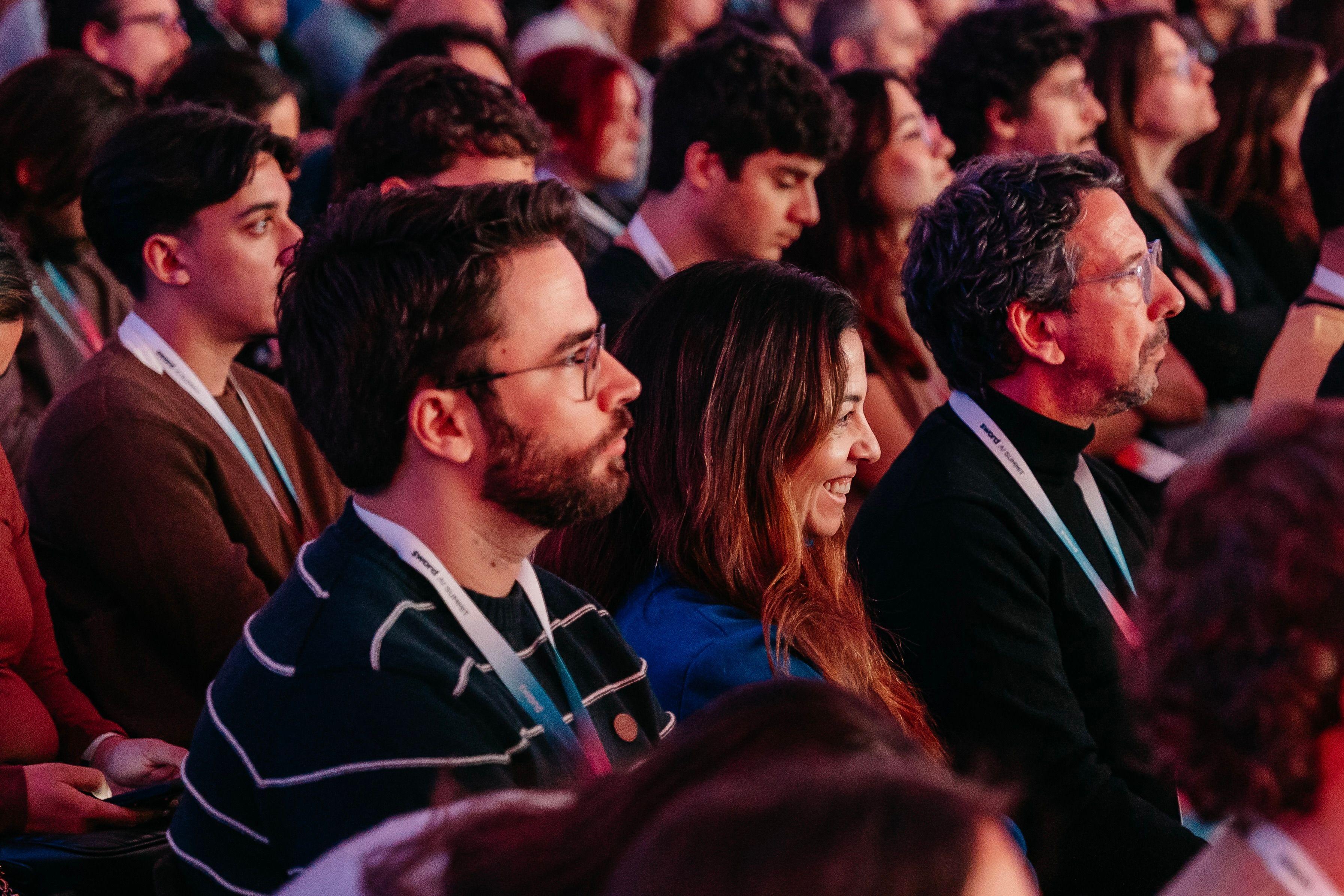
Highlights from Sword AI Summit 2025

Our Sponsors

We don't build this alone

We are thrilled to announce our official sponsors for the 2026 edition: NVIDIA, Nebius, and Microsoft! Beyond supporting this year's summit, they will be hosting exclusive, hands-on technical workshops designed to give you direct access to the latest tools, frameworks, and practical insights shaping the future of AI.

Agenda

What you can look forward to

Keynotes for the builders

Keynotes for the builders

Talks on the latest developments in GenAI, including new models, agentic frameworks, and model serving platforms. Practical insights you can actually leverage in your work.
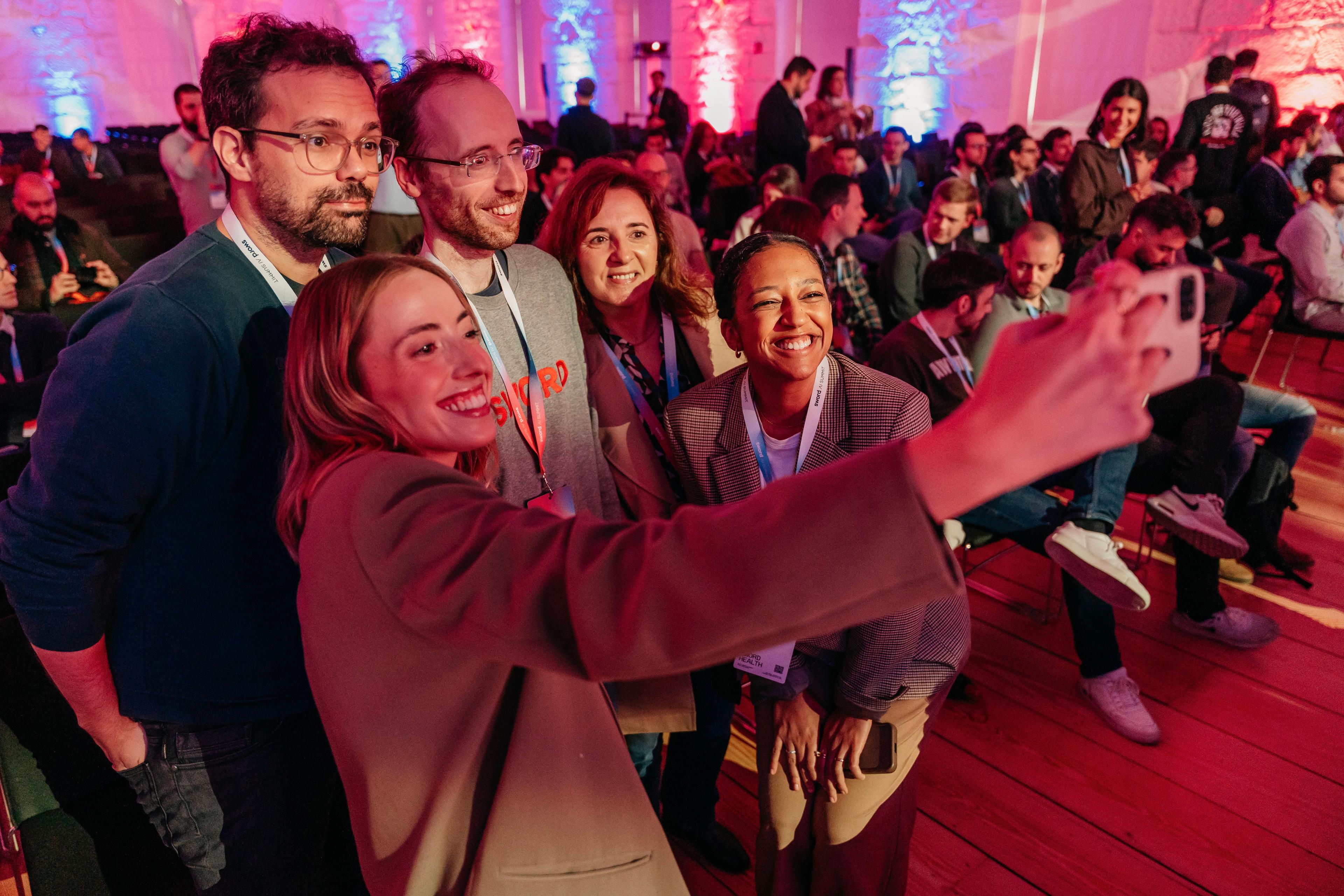
Connect with world-class practitioners

Connect with world-class practitioners

Opportunity to connect with those who are shaping the AI landscape by building state-of-the-art AI models, tools and real-world applications, and thus gain valuable insights straight from the source.

Talk Track

All hours displayed are in GMT
08:30–09:30 am
Check-In
09:30–09:45 am
Welcoming and Opening Remarks
09:45–10:10 am
David Gomes (SpaceXAI): Balancing Agent Autonomy with Safety
Everyone wants agents that run for longer‚ but longer runs mean more interruptions asking the user for permission to act. Avoiding that without loosening the safety envelope is an open research problem‚ and an active area of work at SpaceXAI. This talk walks through how those solutions were developed‚ what is running in production today in Cursor and Grok Bot‚ and how the permission model holds up when agents are left to work for extended stretches.
10:10–10:35 am
Tiago Gonçalves (Loka): Foundation Models on AWS Trainium: From Biology to World Models
Porting research-grade foundation models onto purpose-built silicon is rarely a recompile. This talk tells the story of a collaboration with AWS Annapurna Labs to bring foundation models to Trainium through the Neuron SDK‚ using the port and benchmark of ESMC-300M on Trainium2 as the worked example‚ including where the compiler and hand-written NKI kernels became the real bottleneck. It then shows how the same playbook now extends beyond biology‚ to world models‚ image models and large language models.
10:35–11:20 am
Coffee Break
11:20–11:45 am
Ilya Burkov (Nebius): From Silicon to Inference: Co-Designing the Full Stack for Scientific AI
The next breakthroughs in healthcare and life sciences will not come from bigger models alone. Scientific workloads stress infrastructure differently: massive multimodal datasets‚ heavy simulation and reasoning‚ fast-moving architectures‚ and a shift in emphasis from training models to running them at scale. Optimizing each layer in isolation is no longer enough. This talk makes the case for full-stack co-design‚ bringing silicon‚ systems architecture‚ models and scientific workloads closer together‚ and shows what that buys: AI as a practical engine for discovery.
11:45–12:10 pm
Felipe Soares (NVIDIA): Generating Is Easy. Selecting What Matters Is Hard.
LLMs can produce training examples at almost unlimited scale‚ so the bottleneck is no longer generation but selection. The hard part is defining "good" precisely enough to filter reliably. This talk covers how to score candidate data on correctness‚ difficulty‚ diversity and training value‚ where standard selection heuristics quietly introduce bias‚ and how that bias surfaces downstream in post-training. The goal throughout is identifying data that genuinely teaches the intended behavior‚ not data that merely looks correct.
12:10–12:30 pm
Open Stage Pitches
12:30–02:30 pm
Lunch Break
02:30–03:55 pm
Catarina Farinha (Sword): Building Chapter 2: The Foundations Behind Sword's Three-Way Care
Chapter 2 reimagines Sword's products as a three-way relationship between the member‚ their therapist‚ and Phoenix. This talk covers the foundational product work behind that shift: long-term memory that persists across products‚ so members are known when they re-enroll or move between them; Phoenix's personality; and a way of delivering therapy that draws on wearables‚ calendar integration and other signals. It also covers how Phoenix drives engagement through proactive and reactive reminders‚ and how ongoing evaluation holds quality and safety in place.
02:55–03:20 pm
Hugo Lopes (Google DeepMind): Persistent Memory Architectures
As base model capabilities converge‚ the next competitive frontier is not raw intelligence but knowing the user. This talk traces the move from stateless‚ "goldfish-memory" LLMs to persistent memory architectures‚ covering in-context retrieval‚ agentic memory systems and emerging test-time parametric approaches. It examines the practical engineering required to balance relevance and safety‚ the difficulty of evaluating subjective personal alignment‚ and what it takes to build AI assistants that reliably earn long-term user trust.
03:20–03:45 pm
Sérgio Pereira (Critical Software): Intelligence for a Deterministic World
Safety-critical engineering has no tolerance for a model that is usually right‚ which makes it one of the hardest places to put AI agents to work. This talk sets out three foundations for doing it anyway: ontologies that encode engineering judgment so the system reasons in the domain's own terms‚ evals that turn trust into numbers‚ and evidence trails that make every decision traceable for audit. The through-line is that the binding constraint is the knowledge‚ not the model.
03:45–04:30 pm
Coffee Break
04:30–04:55 pm
Pedro Tabacof (Fin): AI Evals: How to Evaluate Your AI Agent, and Some War Stories
Fin was the first AI agent to run outcome-based pricing on top of frontier LLMs‚ and three and a half years in production have produced a lot of lessons‚ several learned the hard way. This talk covers the evaluation stack behind it: manual analysis of real conversations‚ offline backtesting with deterministic and LLM-judge metrics‚ A/B testing‚ and production monitoring. Expect the failure modes as much as the methods‚ including what happens when the judge itself turns out to be wrong.
04:55–05:20 pm
Catarina Botelho (Sword): Rewarding Care: Defining the New Frontier for Mental Health Support
Frontier language models are optimized to be agreeable and to keep users talking. In mental health‚ engagement is only valuable when it serves good care: a model that pushes back gently rather than leaving members in their comfort zone‚ helps them reach their own solutions rather than handing them over‚ reaches out before it is asked to‚ and responds to the member's actual day rather than an idealized one. This talk covers the research behind that frontier: measuring turn by turn where current models fall short‚ defining good and safe support with clinicians‚ and building the simulation and judging tools that let clinical judgment scale. It then shows how the model was trained inside Dawn's proactive environment‚ how safety is deployed in layers rather than as a single filter‚ and where it stands on benchmarks built from clinical judgment rather than general-purpose tests.
05:20–05:45 pm
Henry Broomfield (OpenAI): Easier Said, Than Done
People often work out what they mean by talking it through. GPT-Live makes that a practical way to build with AI‚ running a continuous conversation in which the voice model itself decides when to speak and when to listen. This talk covers what happens under the hood‚ including how turn-taking is handled and how heavy work is delegated to frontier intelligence while the conversation carries on. Developers leave able to treat conversation as a first-class interface alongside the text box.
05:45–06:00 pm
Closing Remarks with Donation Moment

Workshop Track - Limited Spots

All hours displayed are in GMT
11:20–12:30 pm
Roberto Arocha (Microsoft): From Prototype to Proof: Building a Production Agent and Actually Knowing It Works
Standing up an agent prototype takes an afternoon. Everything after that is where most agent projects quietly stall. This two-hour‚ hands-on session builds an agent with the open-source Microsoft Agent Framework‚ gives it tools through a managed MCP endpoint‚ grounds it in enterprise knowledge with Foundry IQ‚ and deploys it to production. It then proves the agent works‚ with end-to-end OpenTelemetry tracing‚ weighted rubrics for task success‚ safety‚ cost and latency‚ and adversarial tests generated from policy.
02:00–03:45 pm
Ignacio Sarasúa (NVIDIA) and René Schönfelder (Nebius): Build, Simulate, Evaluate: Testing Conversational AI with NVIDIA Agent Toolkit and Nebius
A hands-on workshop on generating realistic synthetic data and using it to evaluate and improve AI agents for real-world workflows. It works through practical techniques for testing model behavior‚ iterating on prompts and tools‚ and building more reliable agent experiences‚ using the NVIDIA Agent Toolkit to create the synthetic data for evaluation and the Nebius platform to deploy the models.

FAQ

Know before you go

Stay tuned by following our LinkedIn

  • Who is the event for?

  • When and where is the event?

  • How much does it cost to attend?

  • Can I get an invoice with my VAT number or from my company?

  • Can I cancel my ticket and get a refund?

  • What is the best way to get to the venue?

  • How is the lunch break going to work?

  • What is the dress code?

  • How can I contact the organization?